
News
BOE and Visionox could command 32% of AMOLED shipments if a takeover materialises, Counterpoint says
The researcher models a potential combination using Q2 shipment data; Visionox says no binding transaction has been signed.
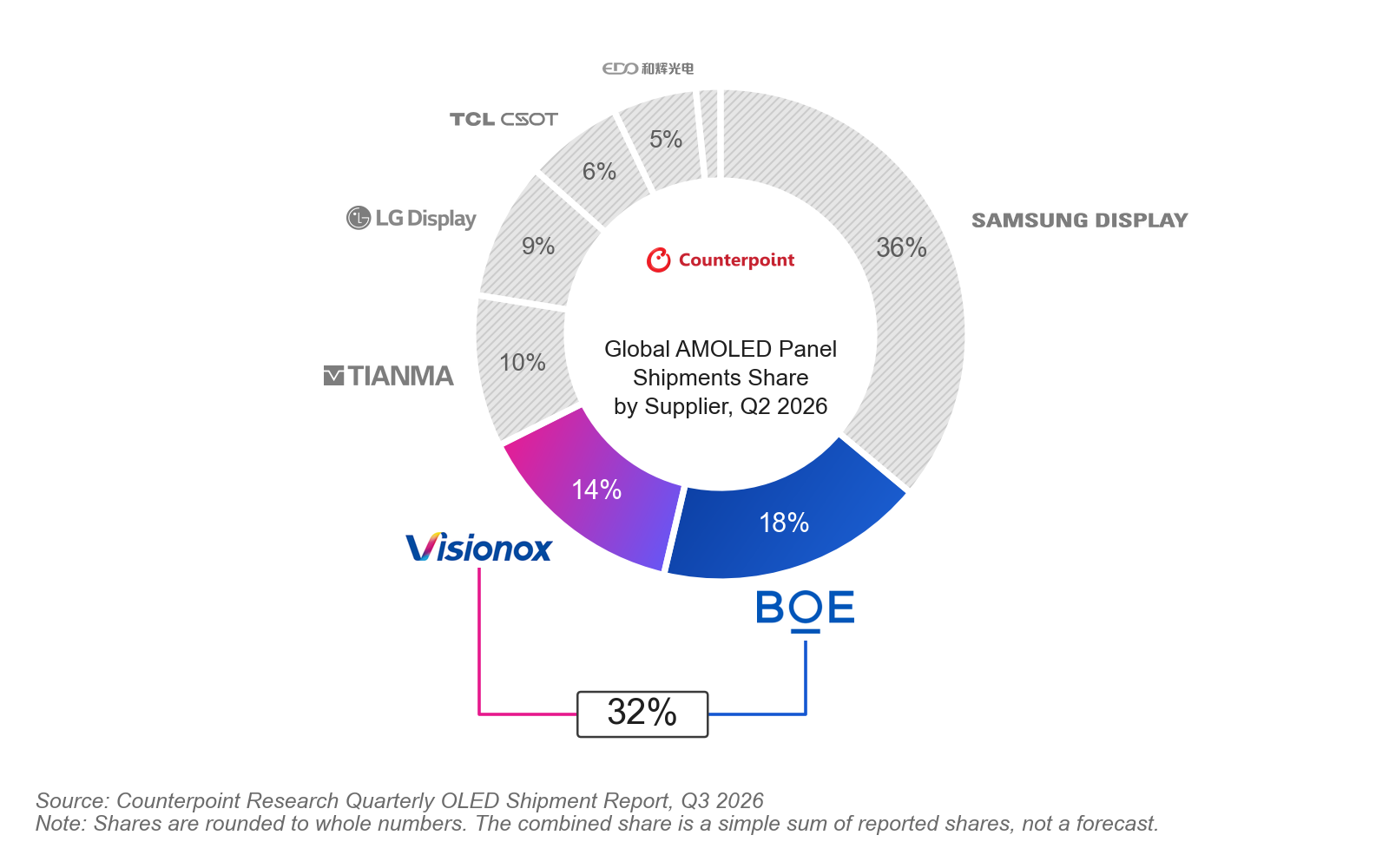
Counterpoint Research has published an analysis of a potential merger between Chinese display manufacturers BOE and Visionox, suggesting that the combined businesses would have ranked second globally for AMOLED panel shipments in the second quarter of 2026. The November 28 analysis is hypothetical: Visionox has not confirmed a transaction, and any future change in its ownership remains uncertain.
What the historical numbers show
According to Counterpoint's quarterly OLED shipment data, BOE accounted for 18% of AMOLED panels shipped worldwide during Q2, compared with 14% for Visionox and 36% for Samsung Display. Combining the two Chinese companies' historical shares produces a figure of around 32%, close to the Korean supplier's position. This is an illustrative calculation based on an existing quarter, not a forecast of the market share a merged business would achieve.
Reports dated November 24 suggested that BOE's interest had extended from an OLED production line to the wider Visionox business. Visionox stated on November 25 that no specific transaction plan had been agreed and that it had not entered a binding agreement with any investor. Consequently, the potential acquisition should not be reported as completed or approved.
Implications for display manufacturing
Counterpoint sees potential benefits in combining production capacity and different manufacturing approaches, particularly as OLED expands beyond smartphones into tablets, laptops and monitors. The researcher also points to considerable challenges in translating scale into competitiveness in higher-value display segments. Its analysis suggests consolidation could influence capacity planning and capital investment across the sector, although the outcome would depend on how the companies integrate and how their competitors respond.
For smartphone and gadget makers, the longer-term question is whether a combination would change the supply of advanced OLED panels and how manufacturers compete on panel specifications and pricing. No immediate change to device prices or confirmed launches follows from the hypothetical analysis. A definitive acquisition announcement, if one occurs, would be a separate development.


Letters to the editor
0 commentsNo comments yet. Be the first to write in.