
News
AR device shipments rose 72% in Q3 2026 as VR headsets declined, Counterpoint reports
Counterpoint’s updated XR market tracker puts Meta at 52% of combined AR and VR shipments.
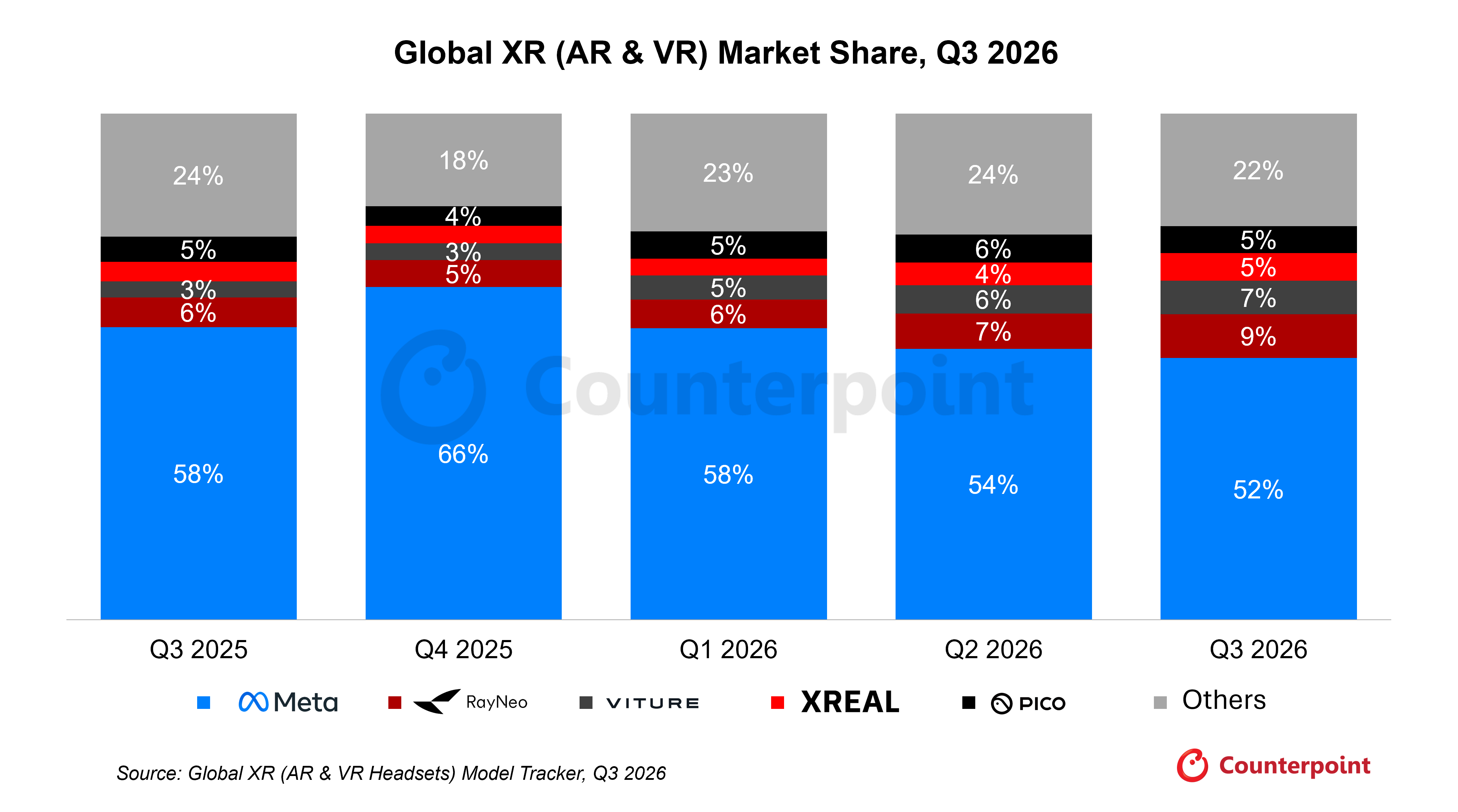
Augmented reality devices and virtual reality headsets are moving in different directions, according to Counterpoint Research's latest quarterly update, published on November 27. Its findings for the third quarter of 2026 suggest that the growth of new AR glasses is providing an increasingly important contribution to the wider extended reality market.
AR grows while VR declines
Counterpoint reports a 72% annual increase in global AR device shipments during Q3, with a 16% increase compared with the previous quarter. AR products represented around 35% of combined XR device shipments, compared with roughly 23% a year earlier. In contrast, VR headset shipments were down 5% year on year and 10% from the preceding quarter. The report attributes the weakness in VR partly to component prices, the limited number of major new devices and longer hardware replacement cycles.
Meta remains the largest manufacturer in the combined AR and VR shipment ranking with a 52% share. Its share was 58% in the equivalent quarter of 2025. RayNeo reached 9% and VITURE took 7%. XREAL and Pico each accounted for 5%, with the remaining manufacturers collectively representing 22%.
A changing type of AR product
The nature of the AR category itself is changing. Devices designed primarily to provide large virtual media-viewing screens still account for just over half of AR shipments, but Counterpoint identifies waveguide-based glasses as a growing segment. Their share reached 46%, helped by devices such as RayNeo iO, Meta Ray-Ban Display and Even Realities G2. That design is associated with information displayed in the wearer's field of view, rather than simply presenting a large virtual monitor.
These are estimates of shipped devices, rather than the number of active headset owners or revenue earned by each brand. Consumers considering a purchase still need to distinguish between media-focused viewers, informational AR glasses and immersive VR hardware.




Letters to the editor
0 commentsNo comments yet. Be the first to write in.