
Smartphones
HarmonyOS reaches 22% of China’s Q3 smartphone sales as iOS reaches 21% globally
Counterpoint’s operating-system sales tracker shows Android at 74% globally, iOS at 21% and HarmonyOS at 5%.
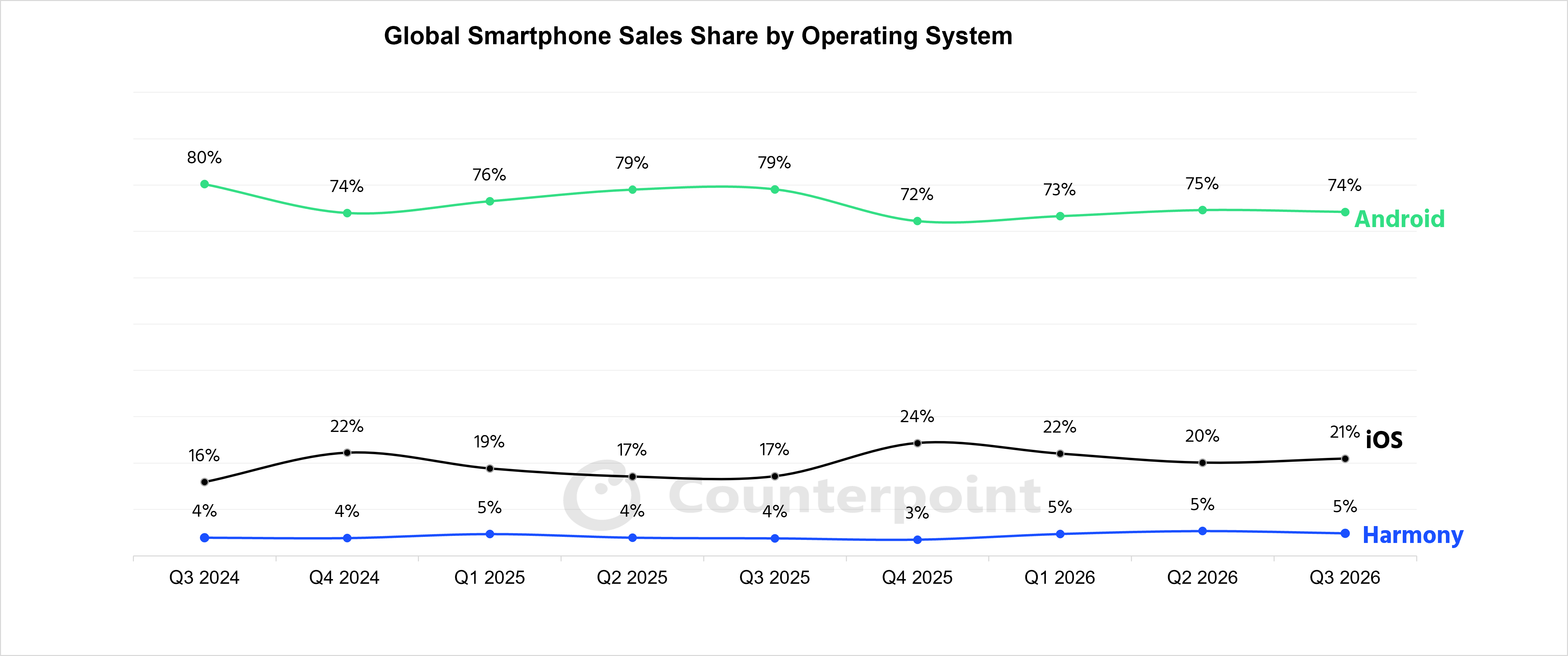
Counterpoint Research has updated its smartphone operating-system market tracker for the third quarter of 2026, outlining how Android, iOS and Huawei's HarmonyOS compare at a time when overall phone demand is slowing. Its November 25 analysis looks at smartphone sales by operating system, rather than the number of currently active devices.
Global operating-system shares
Globally, Android remained the dominant operating system with a 74% share of sales during the quarter. That is five percentage points below its share in Q3 2025. Counterpoint attributed some of the pressure on the platform to memory supply constraints and the weakness in the entry-level Android device market. It noted that new flagship products helped soften that impact.
Apple's iOS achieved 21% worldwide, compared with 17% in Q3 2025. The research firm describes this as its highest share for a third quarter. HarmonyOS accounted for the remaining 5% in the published global breakdown.
Regional differences
The operating-system balance looks different when examining individual countries. In mainland China, Android took 60% of smartphone sales, with HarmonyOS at 22% and iOS at 18%. Huawei's operating system increased its annual share from 17% but was below the 24% registered in Q2 2026. The report identifies demand for Huawei product families as contributing to that performance, including Enjoy and Nova.
India shows an even stronger Android position: 92% of sales compared with an 8% iOS share. Those shares were the same as in the third quarter of 2025. In the United States, iOS remained ahead at 54%, with Android accounting for 46%. These regional figures are rounded market estimates and should not be interpreted as a measurement of every phone in active use.
This is distinct from hardware shipment data because a device sent to retailers may not immediately be purchased by a consumer. The figures also do not show which specific versions customers are running.



Letters to the editor
0 commentsNo comments yet. Be the first to write in.